
This website shares stories, photos, documents, and historical artifacts from the Blue Ridge Mountains Council, BSA, and its predecessors (including Blue Ridge Council, Piedmont Area Council, Roanoke Council, Lynchburg Council, and more). Our archives depend upon the generous donations of scouting materials, and the dedicated work of volunteers. If you wish to contribute any scouting history items, please reach out to us through the Contact Form. In the name of preservation, we appreciate your help!
-
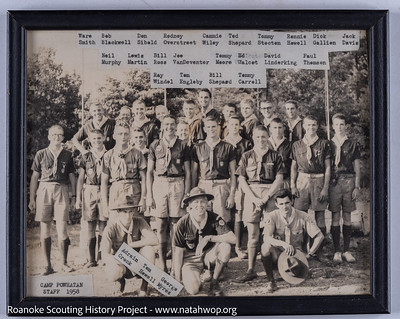
Camp Powhatan Staff 1958
This photo turned up in 2023 in a private collection and was donated to the Roanoke Scouting History Project. It shows, by name, the entire staff of Camp Powhatan in 1958. It is the earliest staff photo in the archive up to this point!
-
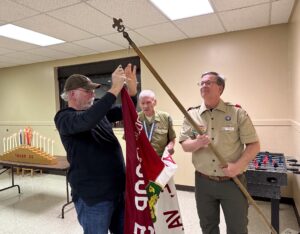
Saying Goodbye to Your Scout Troop of Origin
Last night (December 18, 2023), I witnessed the final Court of Honor ceremony of my original scout unit, Troop 50, of Woodlawn United Methodist Church in Roanoke, VA. After years of declining enlistments and the loss of its Cub Scout “feeder” pack, the troop leaders finally determined there were not enough new scouts entering the…
-
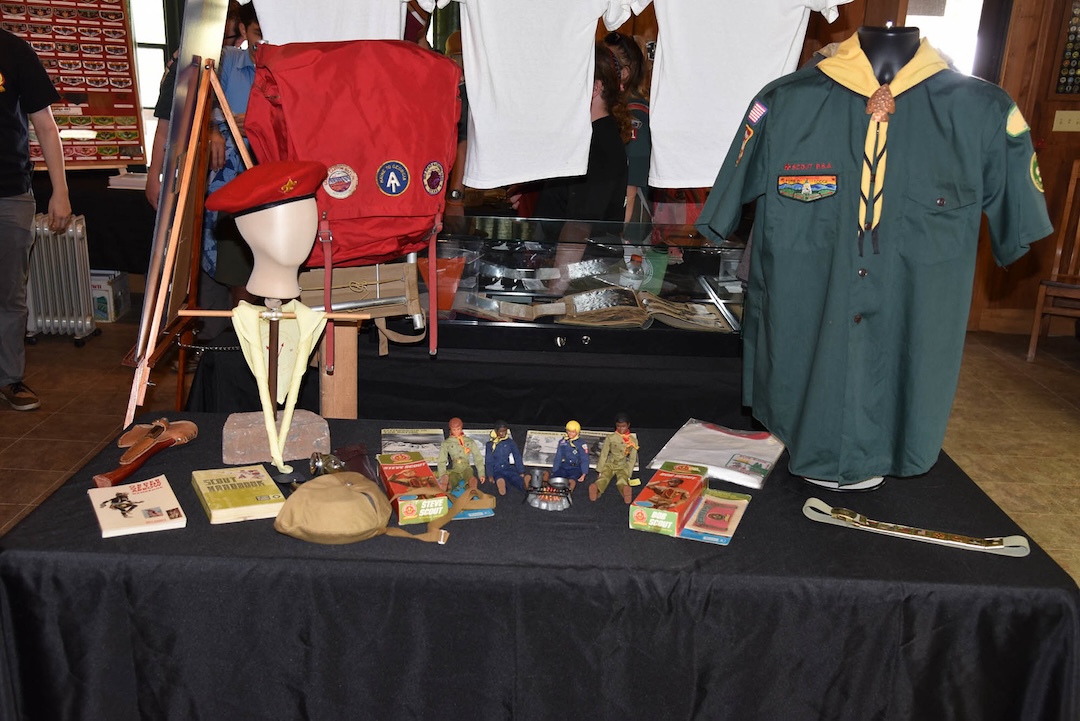
Conclave 2023 in Photos
The 2023 Order of the Arrow Section Conclave took place at Camp Powhatan from April 28-30. These images are mostly from the history museum operated in the scoutmaster’s lounge, an effort led by Stephen Warren, Steve Isom, and Tom Sykes.
-

Hankins Tales: “They call me Crazy John…”
(Originally posted to social media on January 25, 2015) From 1968 to 1978, I worked on the camp Staffs at Camp Ottari and Camp Powhatan. I did a little bit of everything during those years. I was on the original High Knoll staff but my favorite seasons were working as Nature Director. During my last…
-
Hankins Tales: “1963 – The year I became a Boy Scout”
(Originally posted on social media March 27, 2015) I officially became a Boy Scout in November of 1963. In Troop 50, there was a rule that if you wanted to go to summer camp you needed to pass your Tenderfoot Rank first. Most of it was memorization of the oath and law, and you had…
-
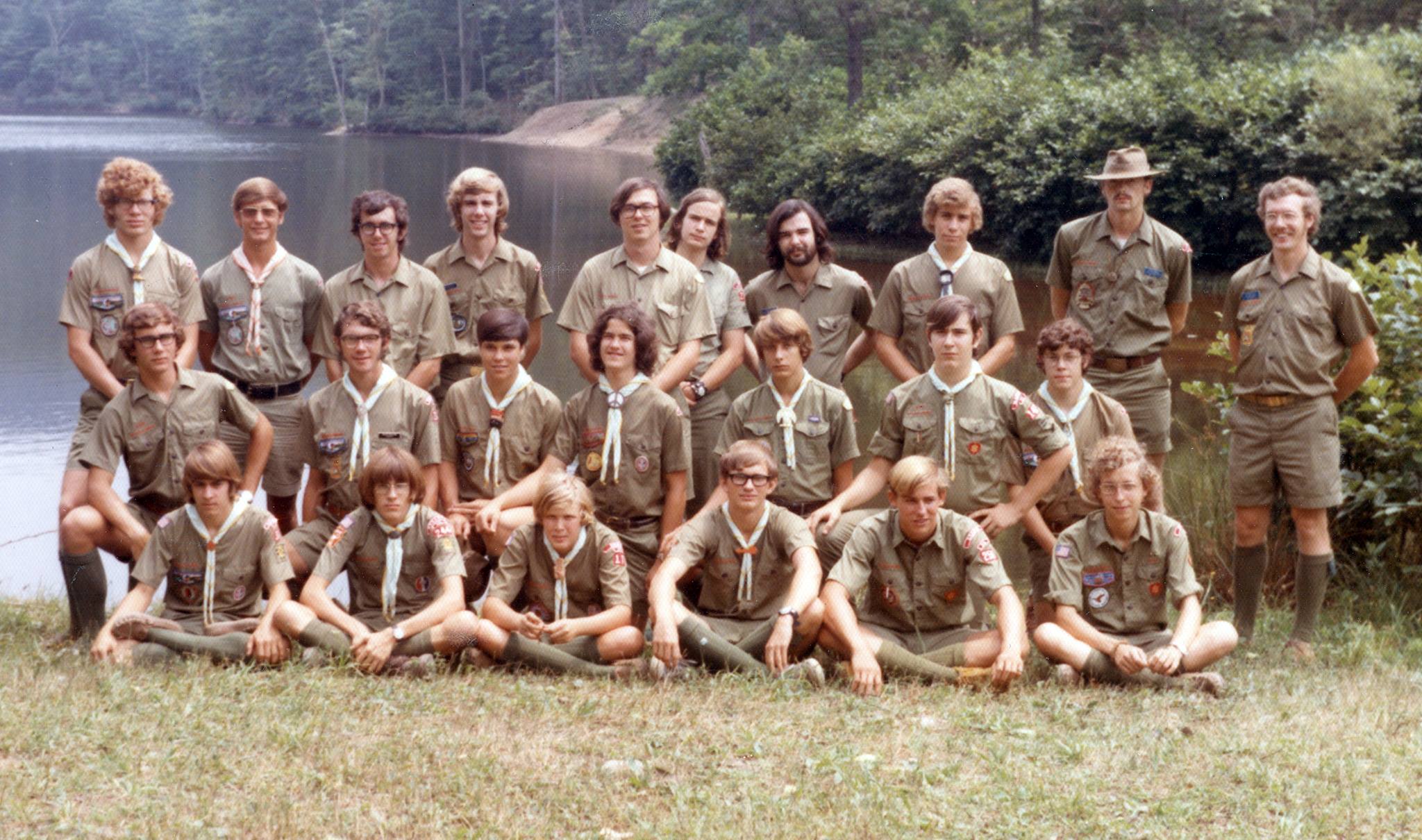
1973 Camp Ottari Staff Photo
Front Row: Russ McDaniel, G.H. Simmerman, Warren Utt, Kelley Moore, Mac Bowles, Paul Diming Second Row: David Martindale, David Milligan, Steve Weisbrod, Dave Johnson, Mike Luken, Steve Bale, Alex Echols Back Row: Brent Lambert, Donnie Davis, Dave Woody, Dwight Willet, Mike Swiney, John Munton, Steve Shedd, Jack Vincent, John Hankins, RAC Cox (Photo submitted by…
-

1980 Camp Ottari & High Knoll Staff Photo
Front Row: Norm Schafer, James Potter, Ed Cox, Jeff Janosko Second Row: John Rhodes, Brett Whitehead, Scott Obenchain, Gary Whaley, Joe Sandoval, Brad Stipes Third Row: Kevin Dillon, Nick Hedges (Int’l Scout), Dennis West, Mark Hughes, Steve Moore Fourth Row: Richie Bolton, Jeff Perry, Carl Unterbrink, Richard Saunders, Kelly Hubert, William Nietzold, Roger Hudnall, G.H.…
-
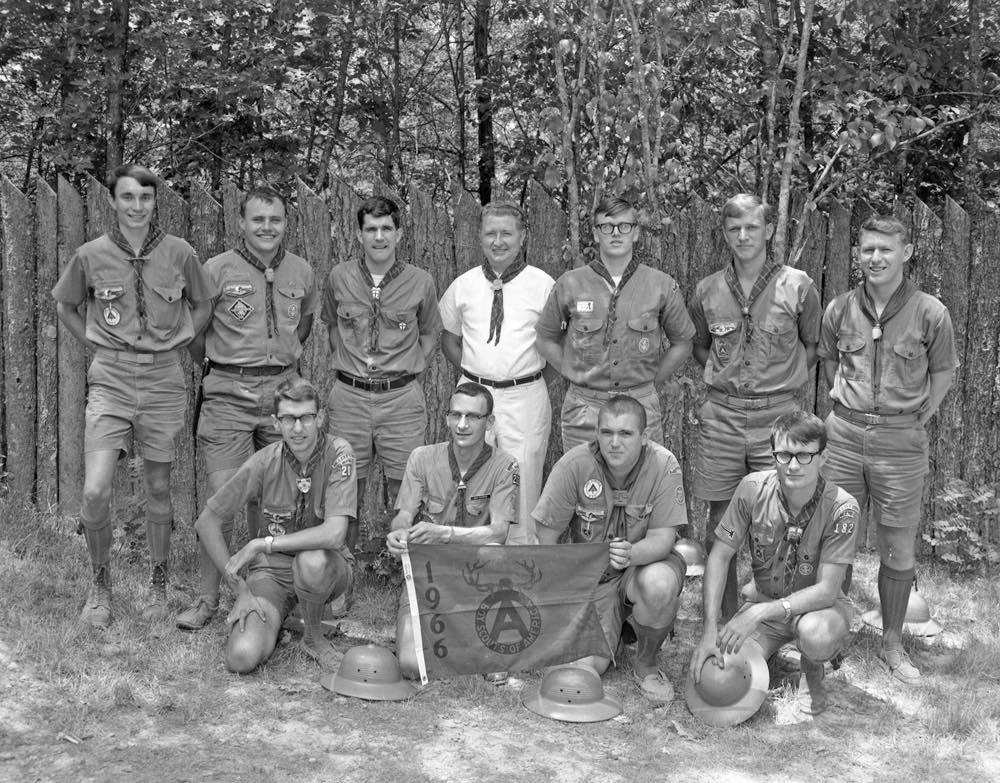
1966 Camp Powhatan Staff Photos
(Staff leadership group photo) Front Row: (l to r) 1-Charlie Hill, 2-Doug Testerman, 3-Eddie Wolcott (Camp Director), 4-? Back Row: (l to r) 1-Shelby Dickerson, 2-Charlie Dent, 3-Willard Kiser (Chaplain), 4-Leon Walker (Health Officer), 5-?, 6-Ross Gale(Waterfront Director), 7-?. (Photo submitted by W. Scott Smith; source: Radford University’s Farmer Collection)